)
)
)
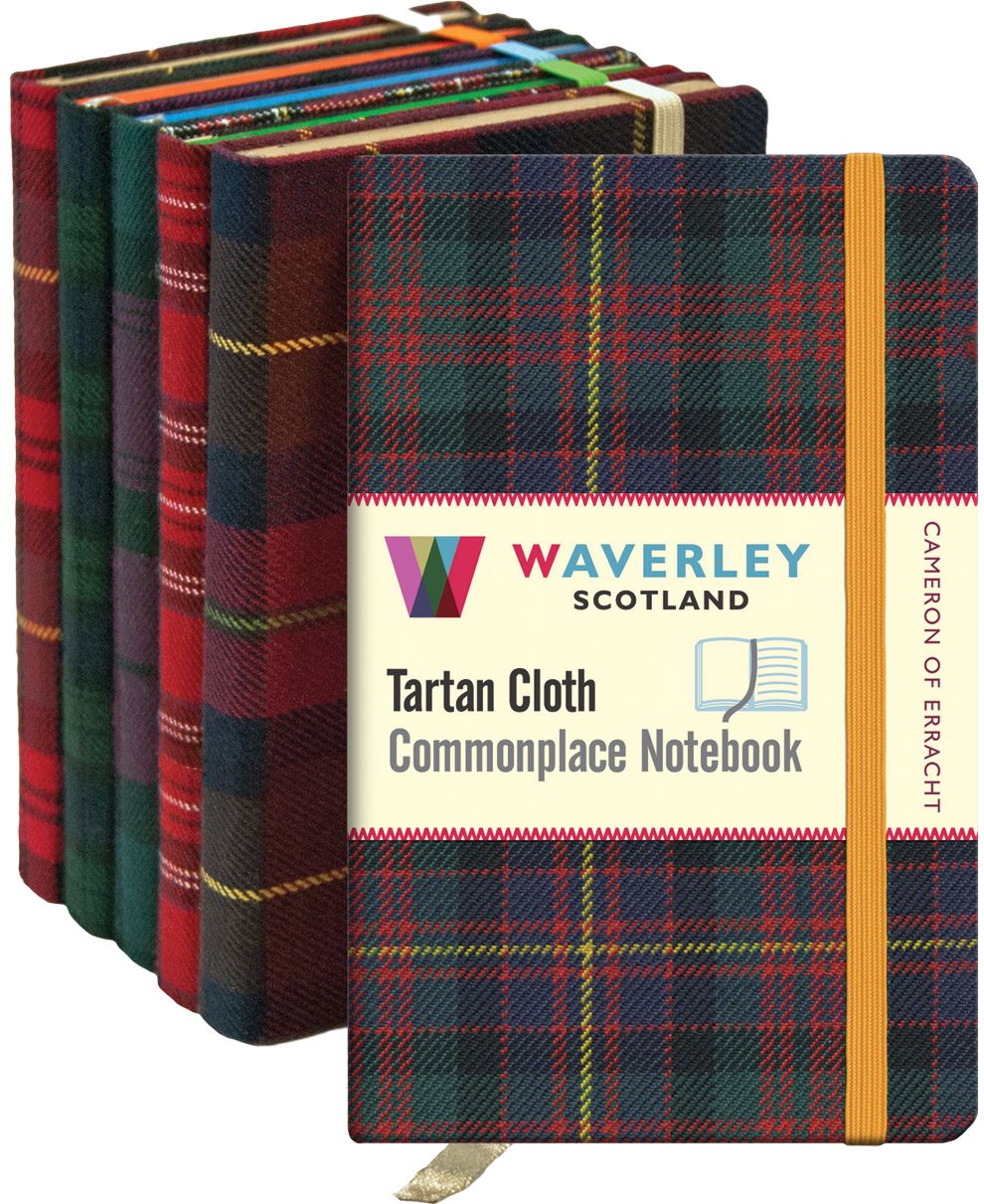
Waverley Scotland Tartan Commonplace Notebooks
)
Three years ago, in our detailed research on a book called 'Robert Burns in Edinburgh', we realised how widespread the use of the 'Commonplace' notebook had been. Robert Burns used one; many in the Enlightenment period used commonplace notebooks.
Commonplace books (or commonplaces) were a way to compile and accumulate knowledge, thoughts and ideas into books, filled with items of every kind: quotes, letters, poems, anecdotes, sketches, tables of weights and measures, medical recipes, proverbs, prayers, and legal formulas. They were used by readers, writers, students, and scholars as an aid for remembering useful concepts or facts they had learned.
By the 17th century, commonplacing was formally taught to university students. By the early eighteenth century commonplace books had become information and management devices .
They were used by many thinkers and scientists of the Scottish Enlightenment, such as Frances Hutcheson, David Hume, Adam Smith, Dugald Stewart, Thomas Reid, Adam Ferguson, John Playfair, Joseph Black and James Hutton.
Commonplacing was particularly attractive to authors including Robert Burns, Walter Scott, John Milton, Francis Bacon, E.M. Forster, W.H. Auden, Arthur Conan Doyle and Virginia Woolf.
Today, despite the developments of electronic and digital management recording systems, the demand for high quality notebooks remains. Especially when you have forgotten your charger. Over the years Waverley has researched and published many aspects of Scottish history, and historical figures, and we are passionate about Scottish heritage and tartan.